Mount Ijenblue fire, an acid lake and baskets of sulphur
Two days from Bali to Java: a ferry, a compulsory health check, a few hours' sleep, a night climb to the crater, blue fire, the world's largest acid lake and baskets of sulphur I could barely lift.
On 24–25 October 2026 I went from Bali to the neighbouring island of Java to see the Ijen volcano. It’s an active volcano, and inside the crater there’s a turquoise acid lake, sulphur mining and blue fire that you can only see at night.
In short
Getting there
We met in Mengwi at 2 p.m. First we drove for a while to the port, then took a ferry to Java for about an hour, and drove around the island a bit more.
The first stop was a clinic for a health check: you can’t go up the volcano without one now. Ijen is very popular, and lots of people go up without really understanding what physical effort means. There have been cases of people feeling unwell, because of their blood pressure or something else. So now there’s a check: they measure your temperature, blood pressure and blood oxygen level. The certificate is valid for three days.
Then the hotel and dinner: vegetarian Javanese food. We only got to bed at about nine. The hotel is really just for a few hours: to rest and sleep before the night climb. I slept about four hours, which is perfectly fine. Some people didn’t sleep at all. There are also tours without a hotel: two and a half to three hours on the road, the ferry, the clinic, and straight up the volcano. A bit brutal, if you ask me.
The night climb
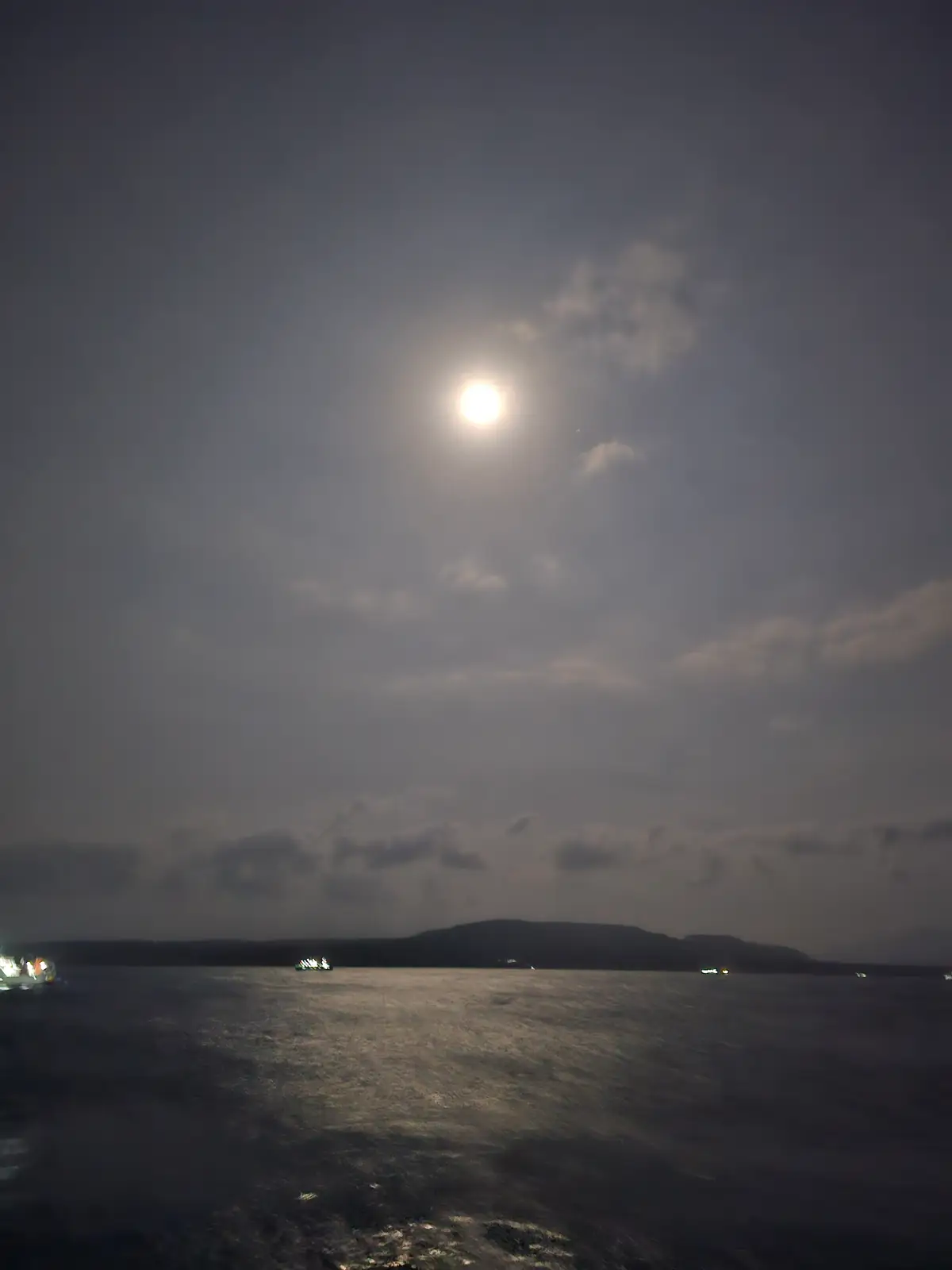
At 1:30 a.m. we all got into the car and drove to the volcano. At the base camp they handed out gear to anyone who needed it: torches, respirators, gloves, and a jacket for me. It’s all included in the tour. I took the jacket just in case: I didn’t want to buy warm clothes just for this trip. In the end I didn’t really need it.
First we climbed about three kilometres, I think, to the crater rim. There are lots of people with torches: it’s a very popular spot. And then we went down right inside.
Blue fire
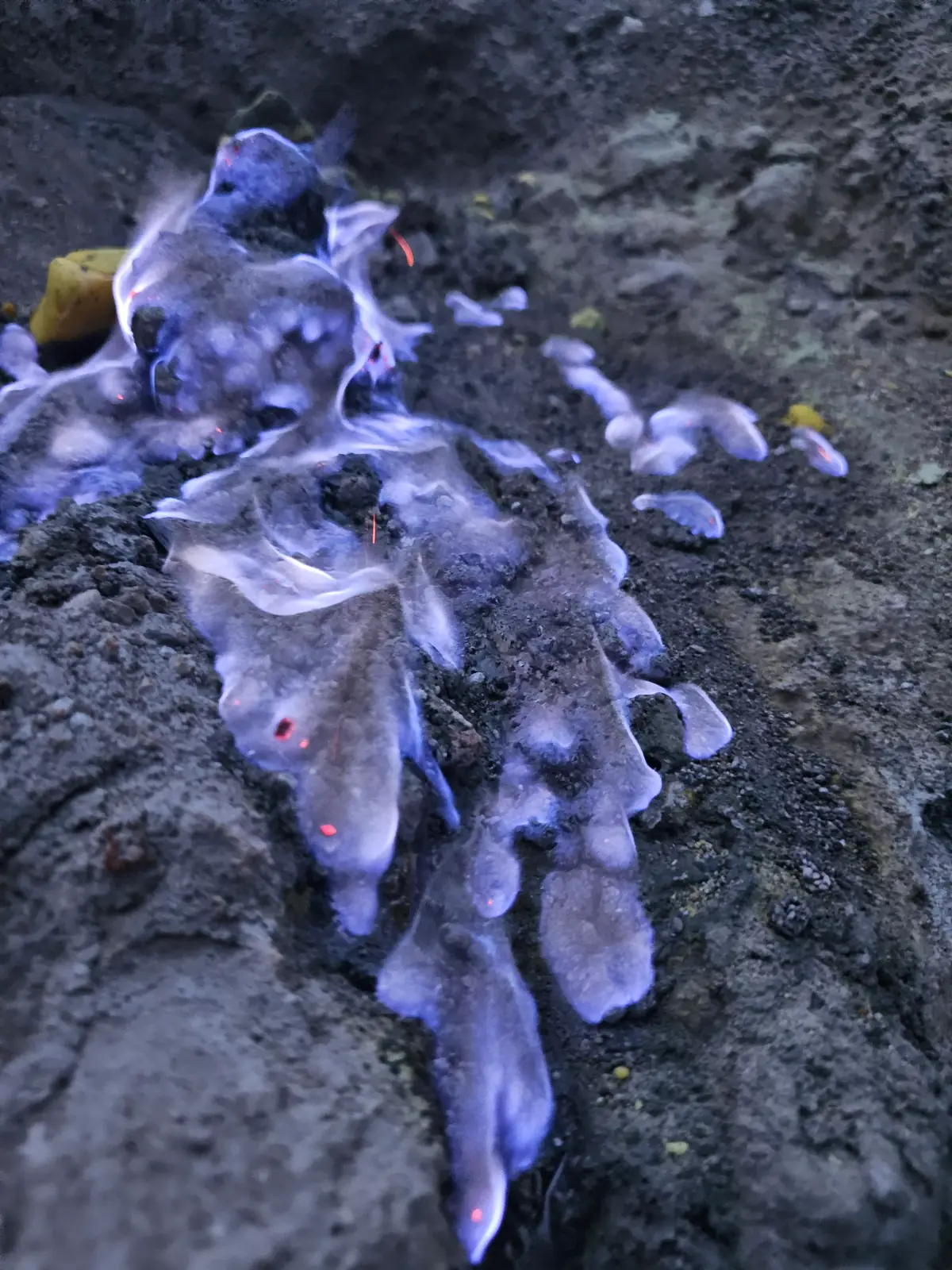
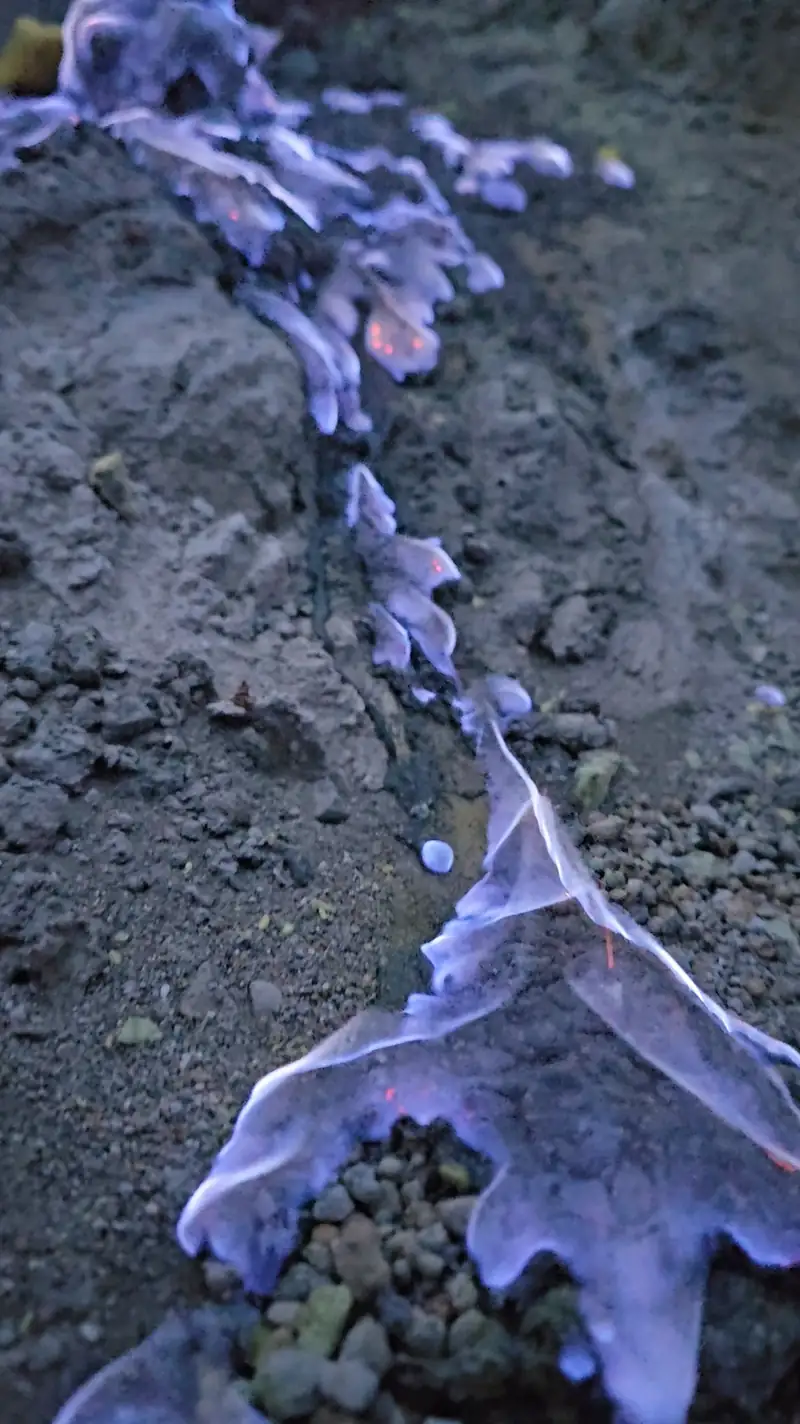
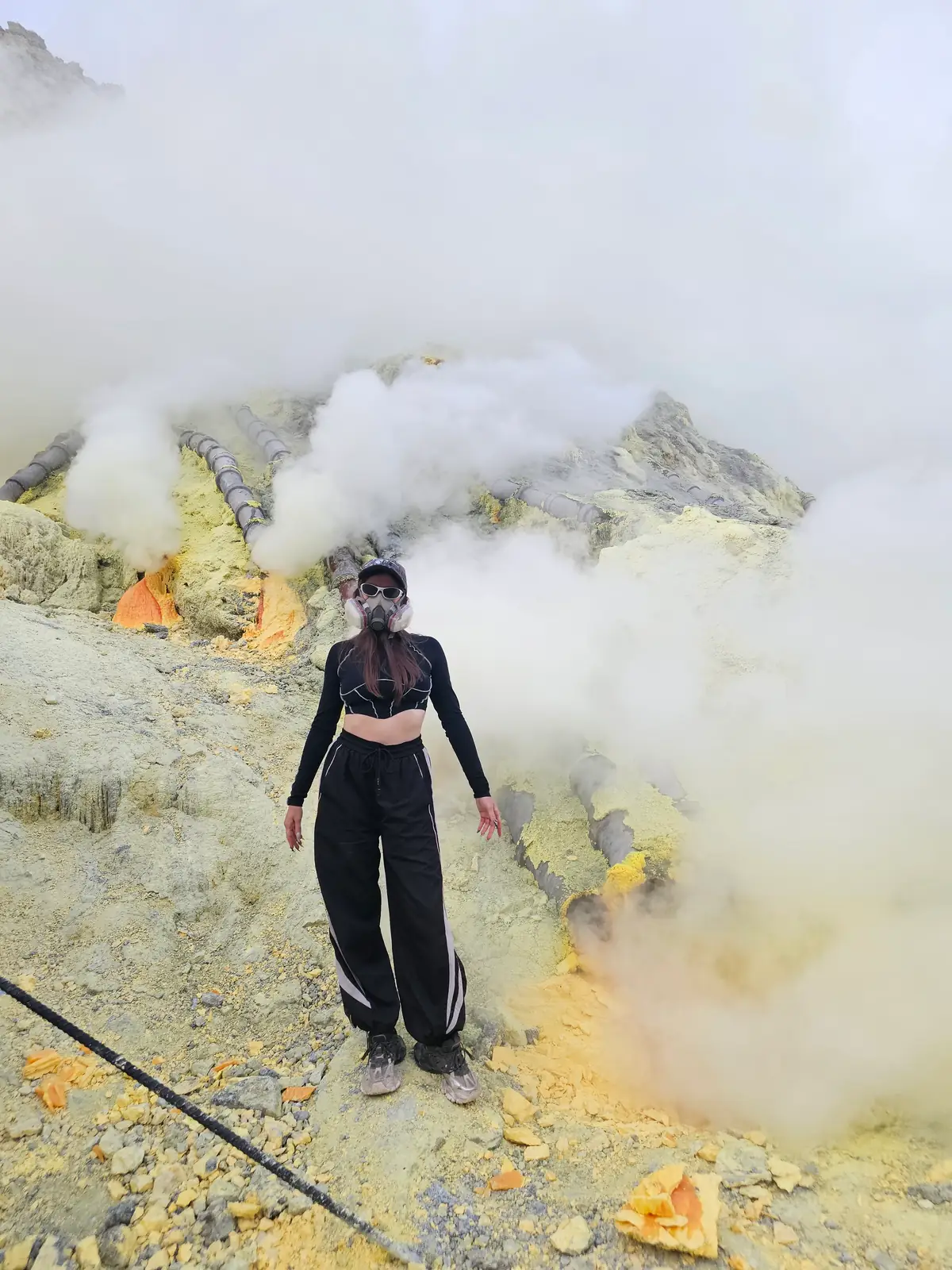
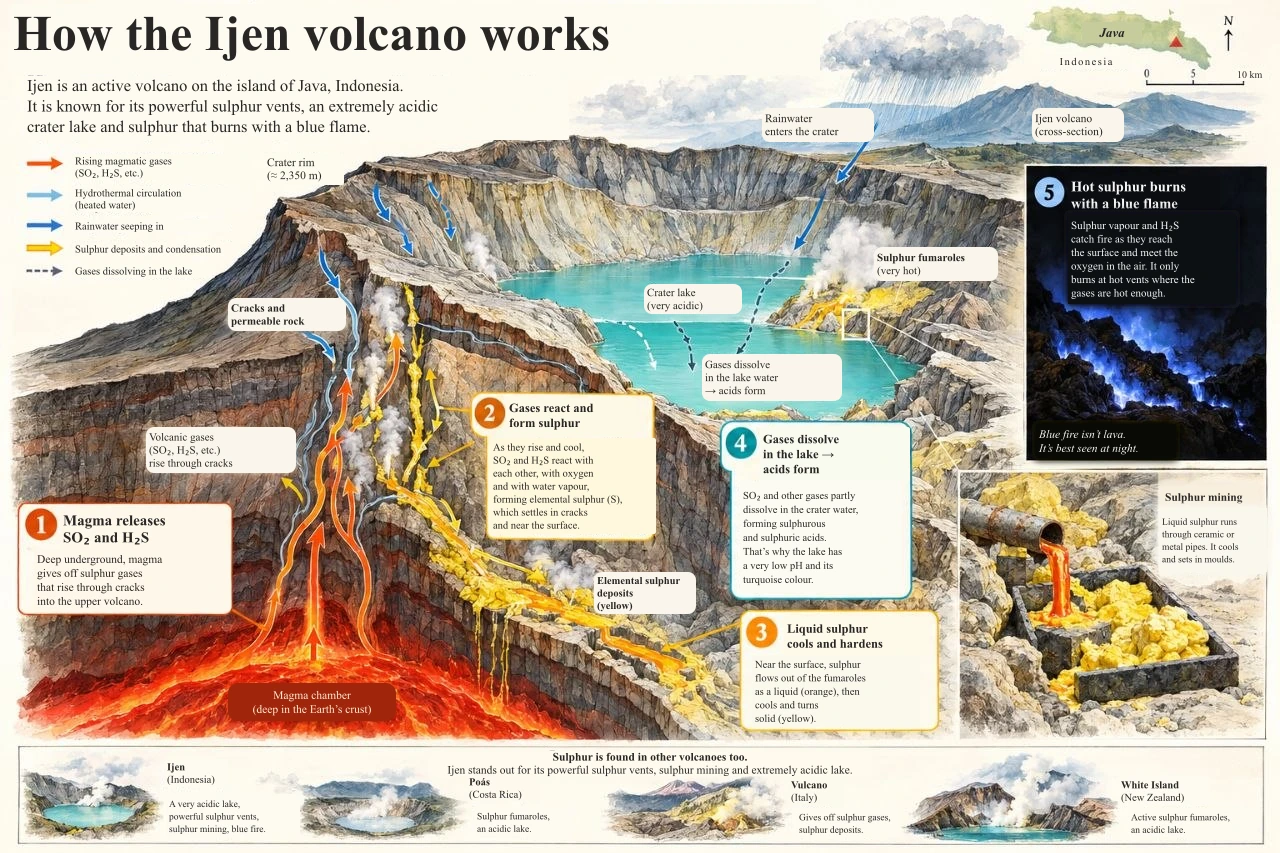
Inside the crater they mine sulphur, and that’s also where the blue fire is. It’s burning sulphur. The magma under the volcano gives off sulphurous gases, which come out through cracks at up to 600°C and burst into blue flames when they meet the air. The sulphur burns in the daytime too, you just can’t see the blue. That’s why tourists are taken up at night.
We got there a bit late, and there was hardly any fire left. So one of the guides (not ours, by the way) decided to show it to us by lighting the sulphur himself. You could say it’s a bit artificial, but the fire is real: that’s exactly how sulphur burns.
The acid lake
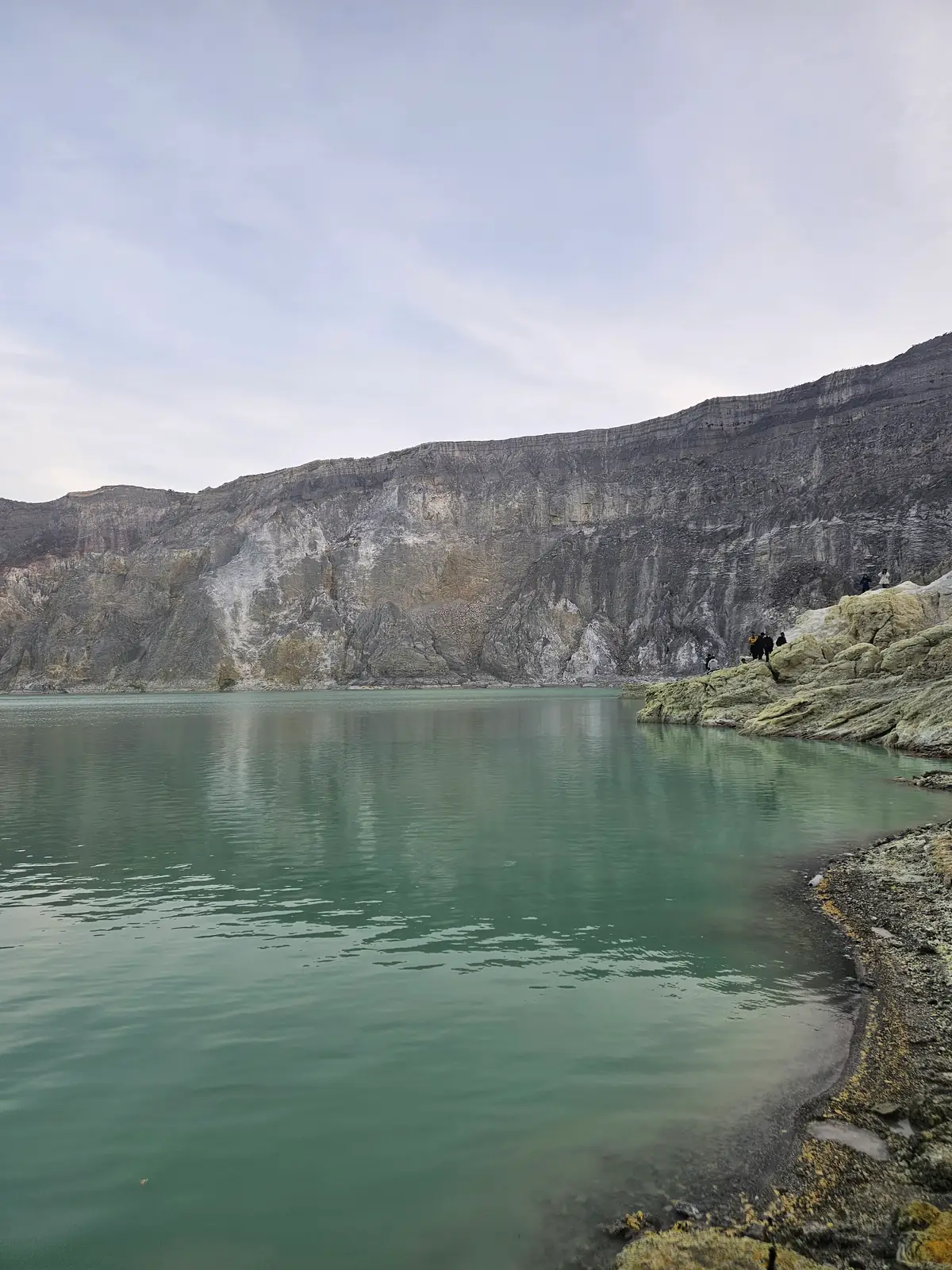
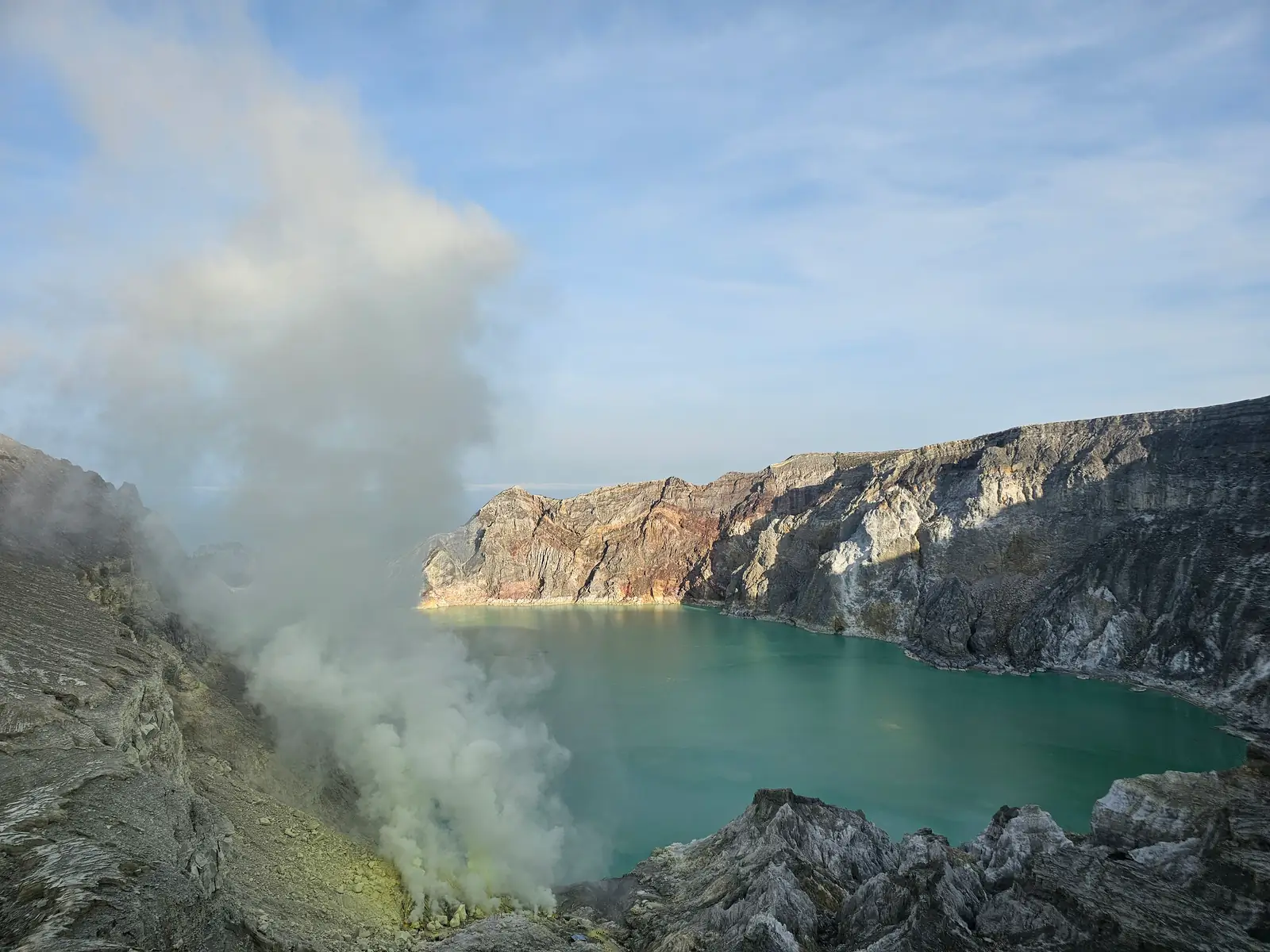
Next comes the lake. It’s the largest acidic crater lake in the world: essentially a solution of sulphuric acid. Not that concentrated, of course; some people even dip their fingers in and nothing happens. We, of course, didn’t touch anything.
At the briefing they warned us that near the lake the ground can be soft, and you might accidentally step in a puddle. If it’s wet, it’s definitely acid. They told us what to do: just wipe it off, and that’s it. Nothing bad will happen, as it’s not as concentrated as in the films.
Sulphur on your shoulders
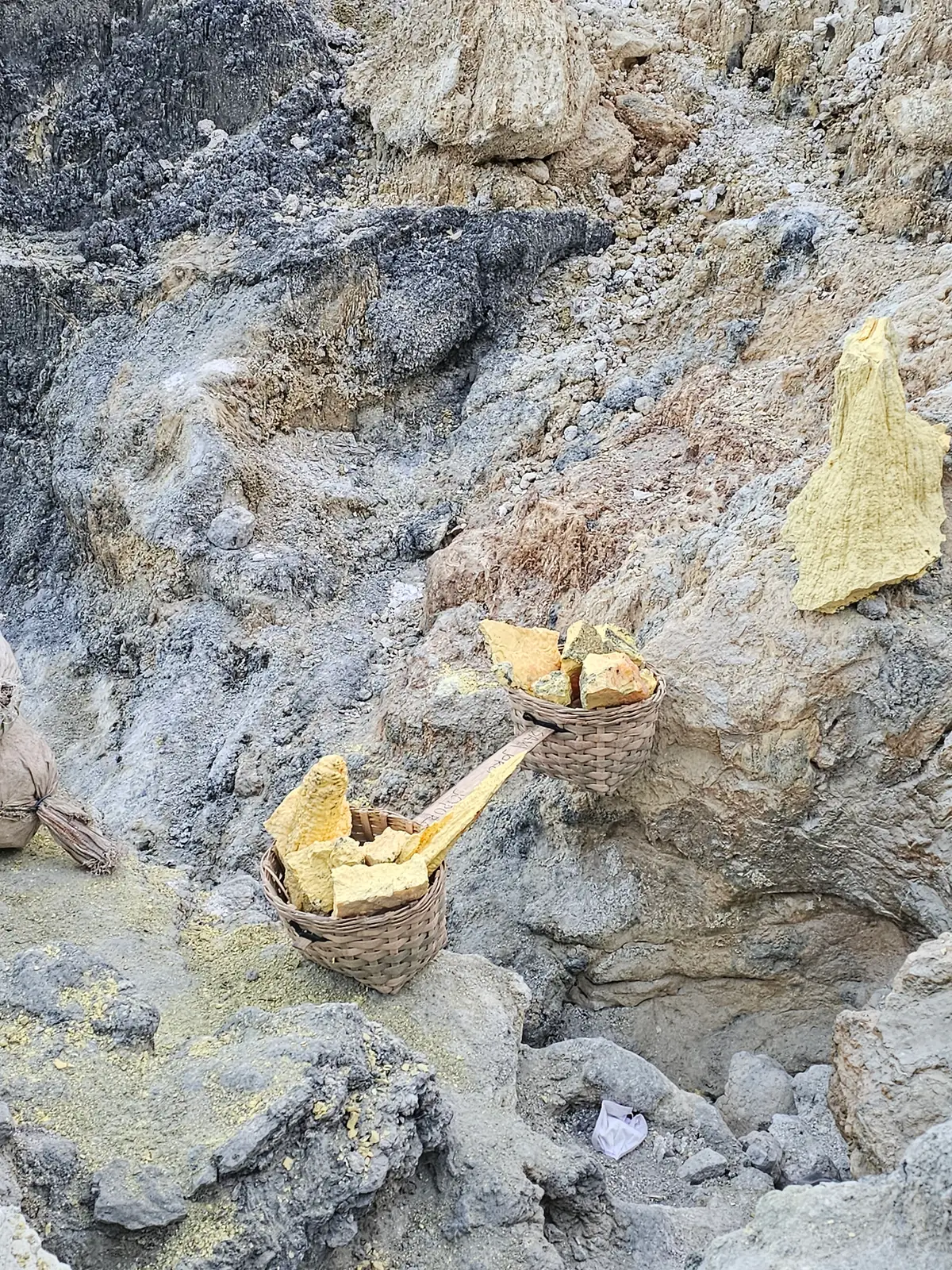
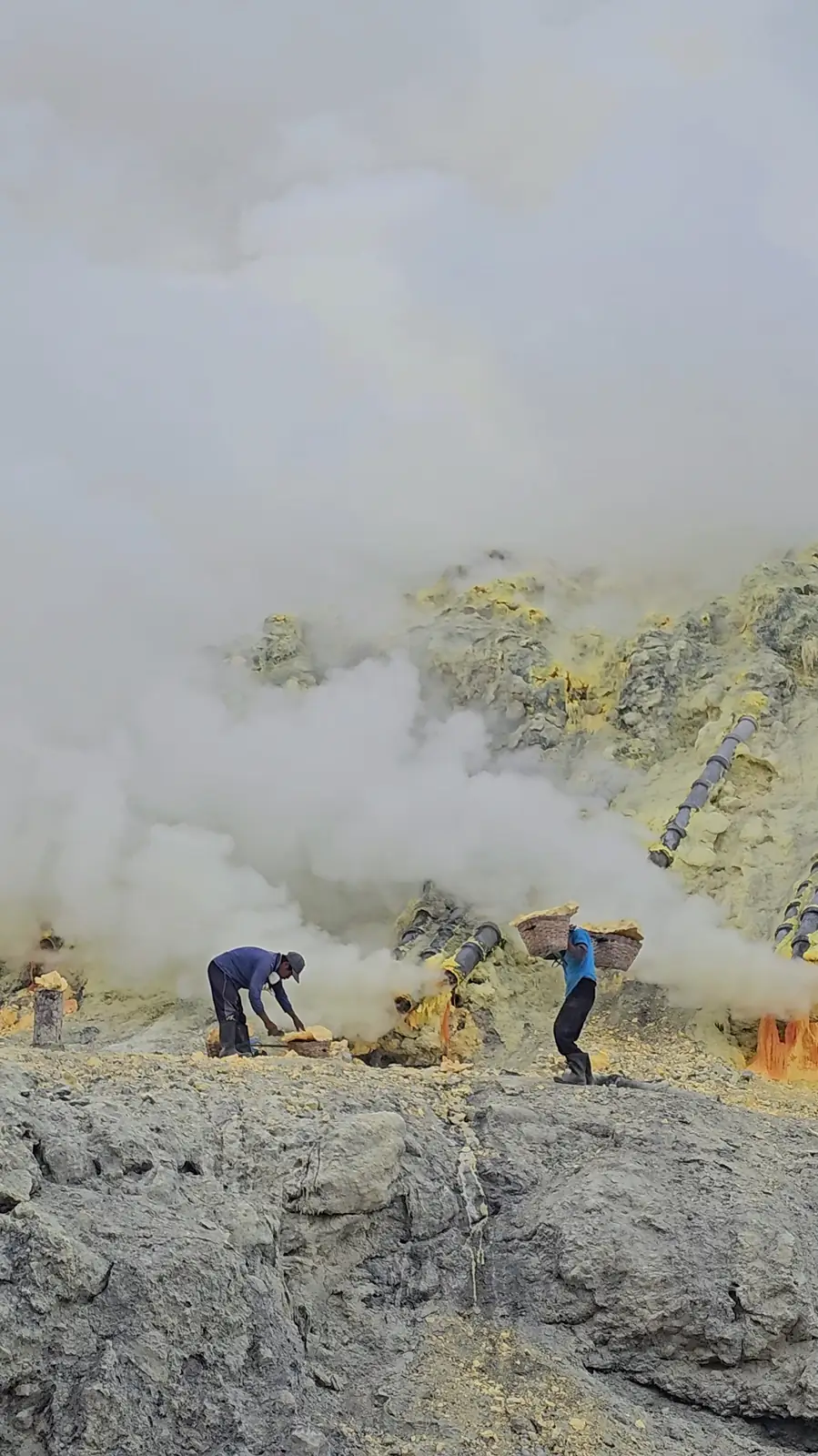
The sulphur mined here is solid: yellow, in big chunks. It’s carried in two baskets on a shoulder pole, and together they weigh more than 60 kg. They let us try lifting them, and it’s really hard. I thought my shoulder was about to snap 😵
The people who mine the sulphur make three or four trips a day with baskets like these. And sadly, they earn very little for it. It’s really sad.
In the crater there are guys selling little figures made of sulphur. Even if you don’t want a figure, give them some money, however little. Hardly anyone buys the figures, and the pay here really is low. They work in a sulphur crater, and they deserve our thanks for it.
Back down in daylight
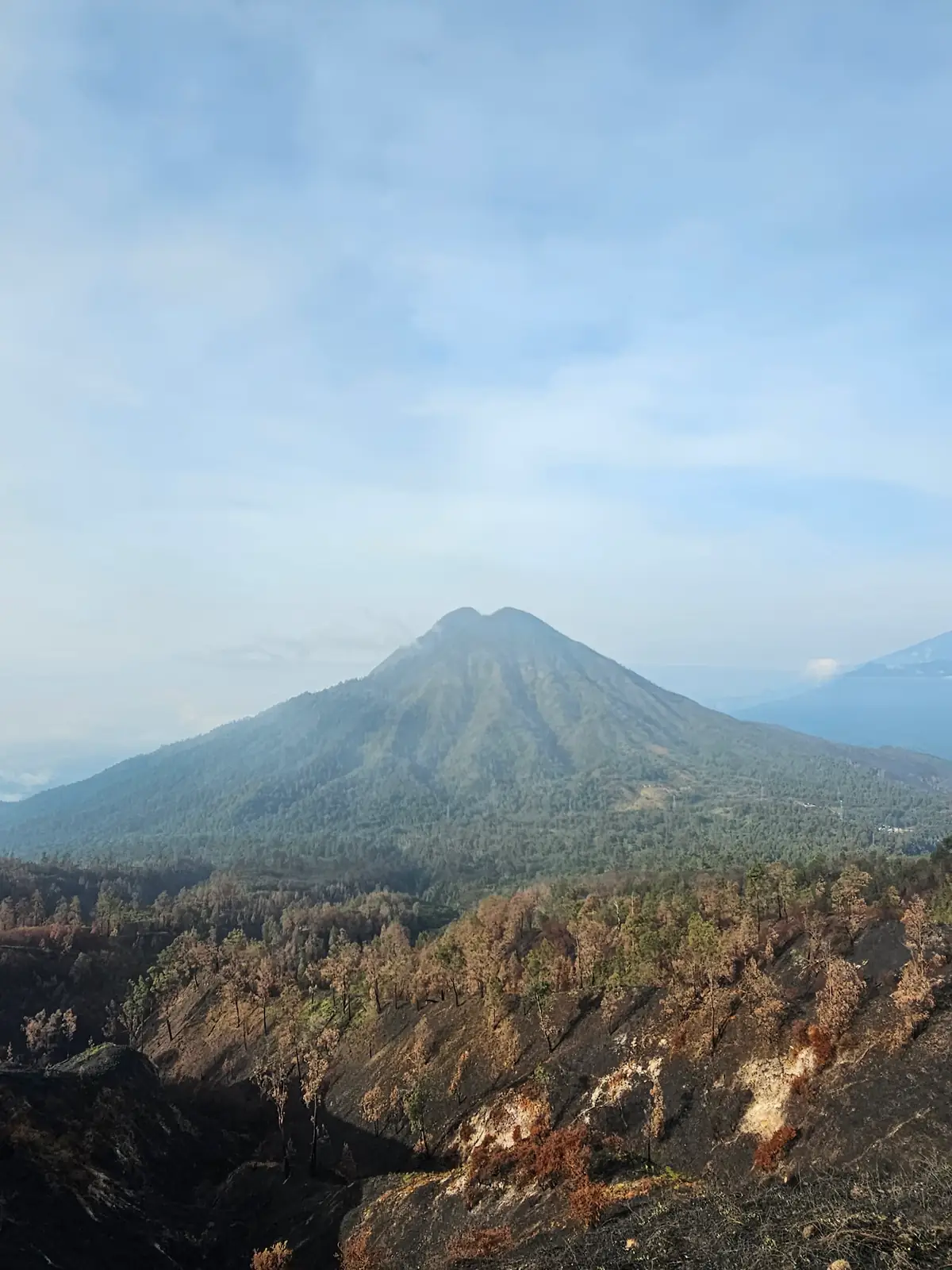
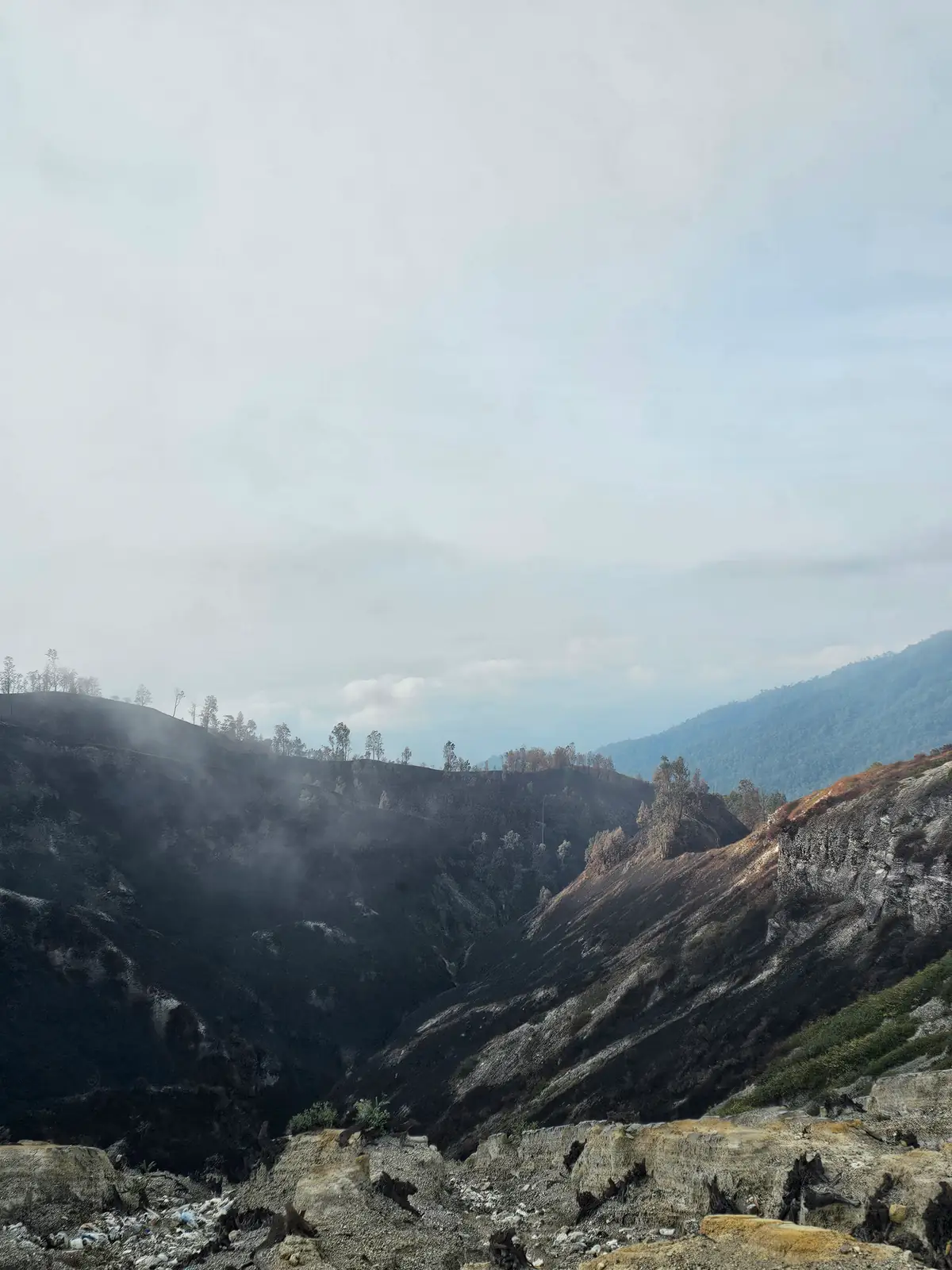
We looked at everything, took photos and climbed back out. We came down in daylight, and the views were completely different: you can see the neighbouring volcanoes.
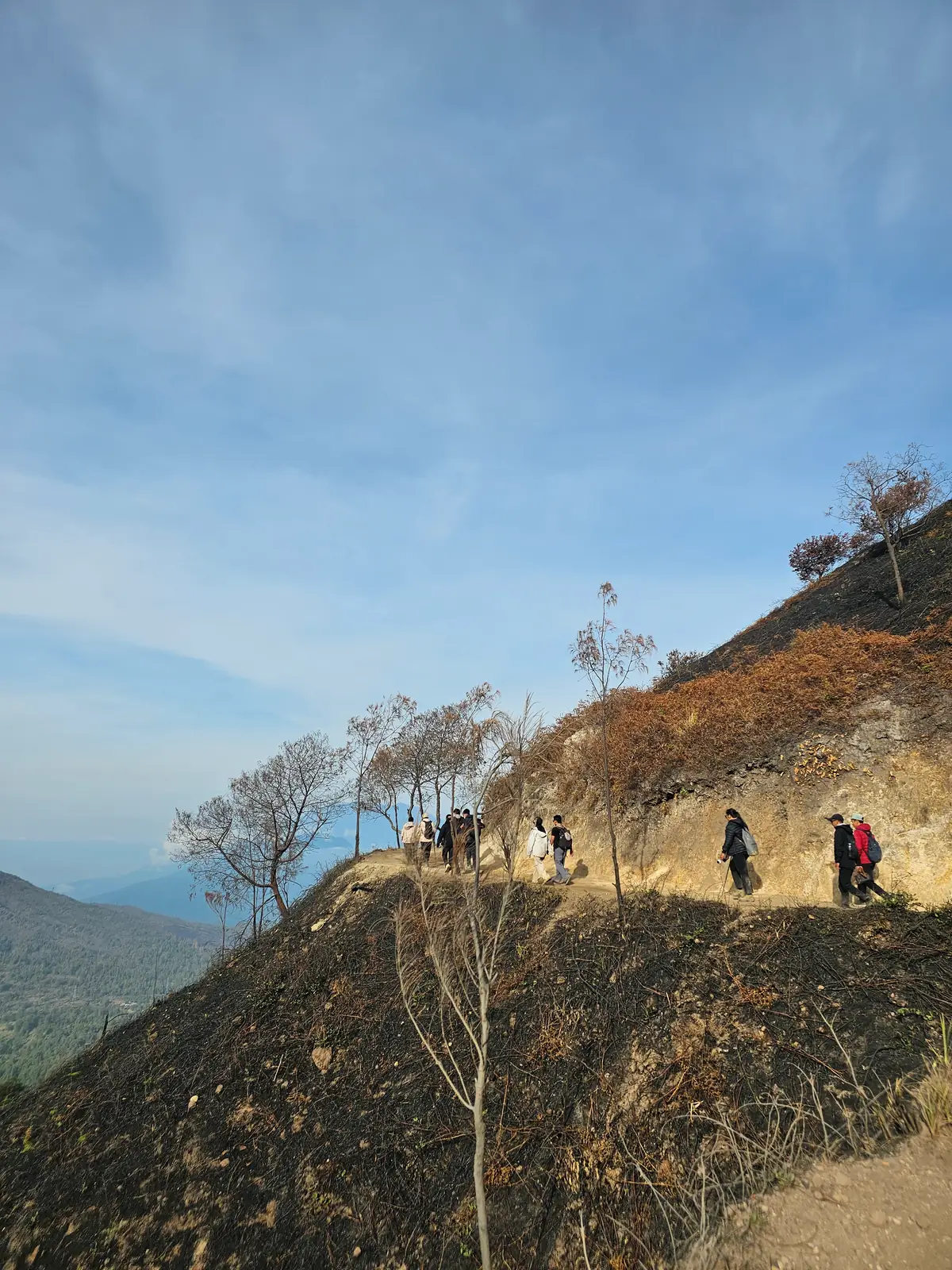
But the slopes are black in places. In September 2026 there were huge forest fires here, and the volcano was closed because they took so long to put out. It used to be all green. It’s sad. I hope it grows back at least a little within a year or so.
The path down is tricky in places: small loose stones, easy to slip on. That’s normal and can happen to anyone, so watch your step.
The group
It was a group tour that I just joined. The group was really international and fun: Poles, an Italian, an Australian, an American and me. One girl had come to Bali on an exchange programme to study Balinese Hinduism, how it differs from Hinduism in India and Nepal. I’d tried googling it, but everything I found was very superficial, so she promised to share her research with me. I can’t wait to read it.
What I’d do differently
The tour was great. But next time I’d do both volcanoes at once, Ijen and Bromo. I still regret not noticing in advance that tours like that exist, and not taking time off for one. I wanted to go to Bromo with people from the group straight after Ijen, but it’s another six hours on the road, plus the climb and the way back, and I’d never have made it back for work.
I was genuinely upset it didn’t work out. Everyone told me, and still tells me, that it’s a stunning volcano, and I’ve seen it in reels. I really want to go back. And the owner of our hotel said: Bromo isn’t going anywhere 🌋 So I’ll be back to see it and to travel around the Indonesian islands.
Comments
I don’t ask for your email. I read every comment myself before it’s published.