A Balinese homea school, the Barong, offerings and planting rice
An English lesson at a village school, a procession with offerings carried on our heads, the Barong, how a Balinese home is laid out, why teeth are filed, and my debut as a rice farmer.
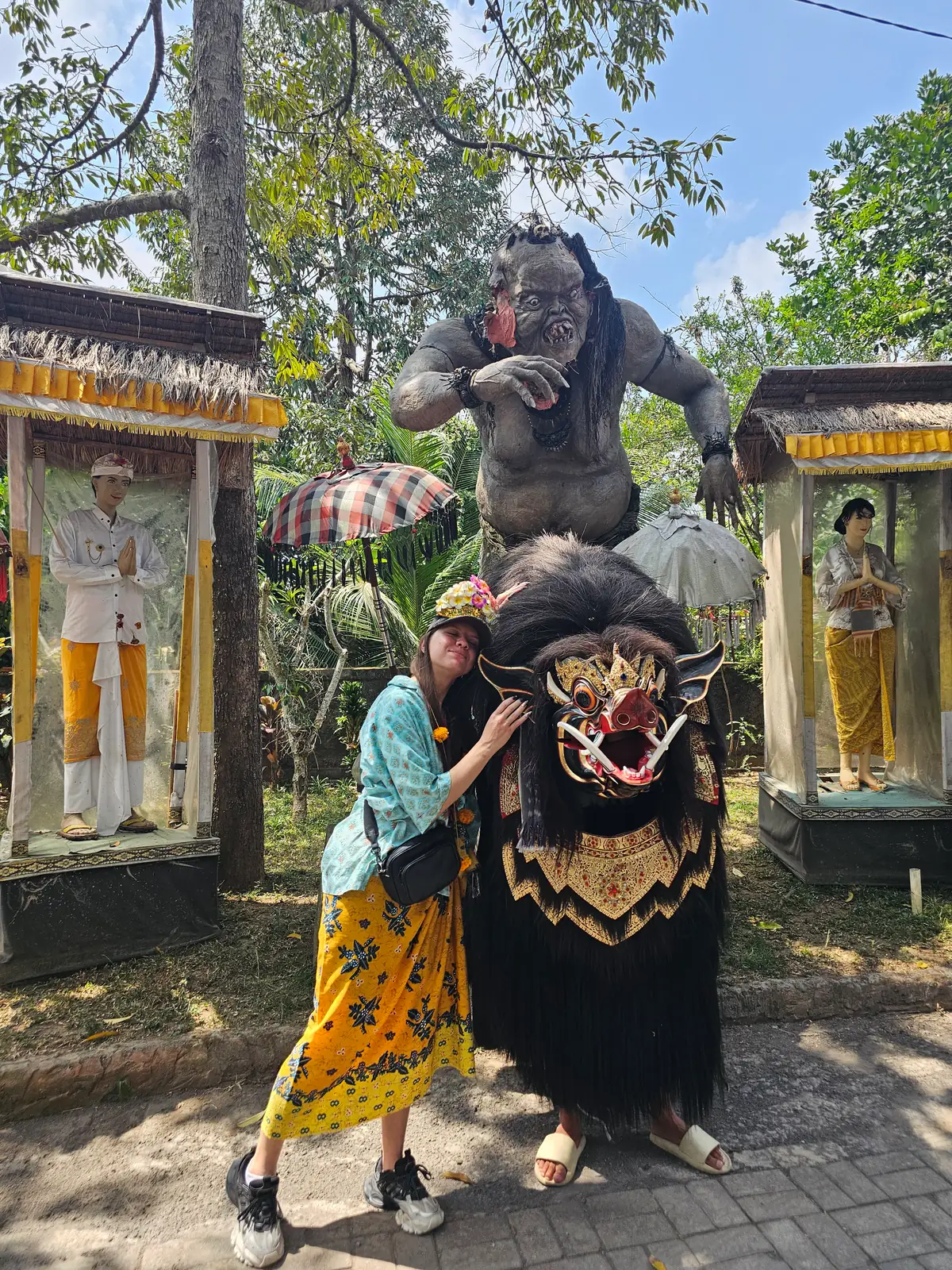
On 13 October 2026 I spent a day in a Balinese village: at a school, in a temple, in a traditional home and in a rice field. ChatGPT found this activity, Balinese Traditional House, for me. I expected crowds and a tourist trap. It wasn’t like that at all, and I loved it.
In short
The school
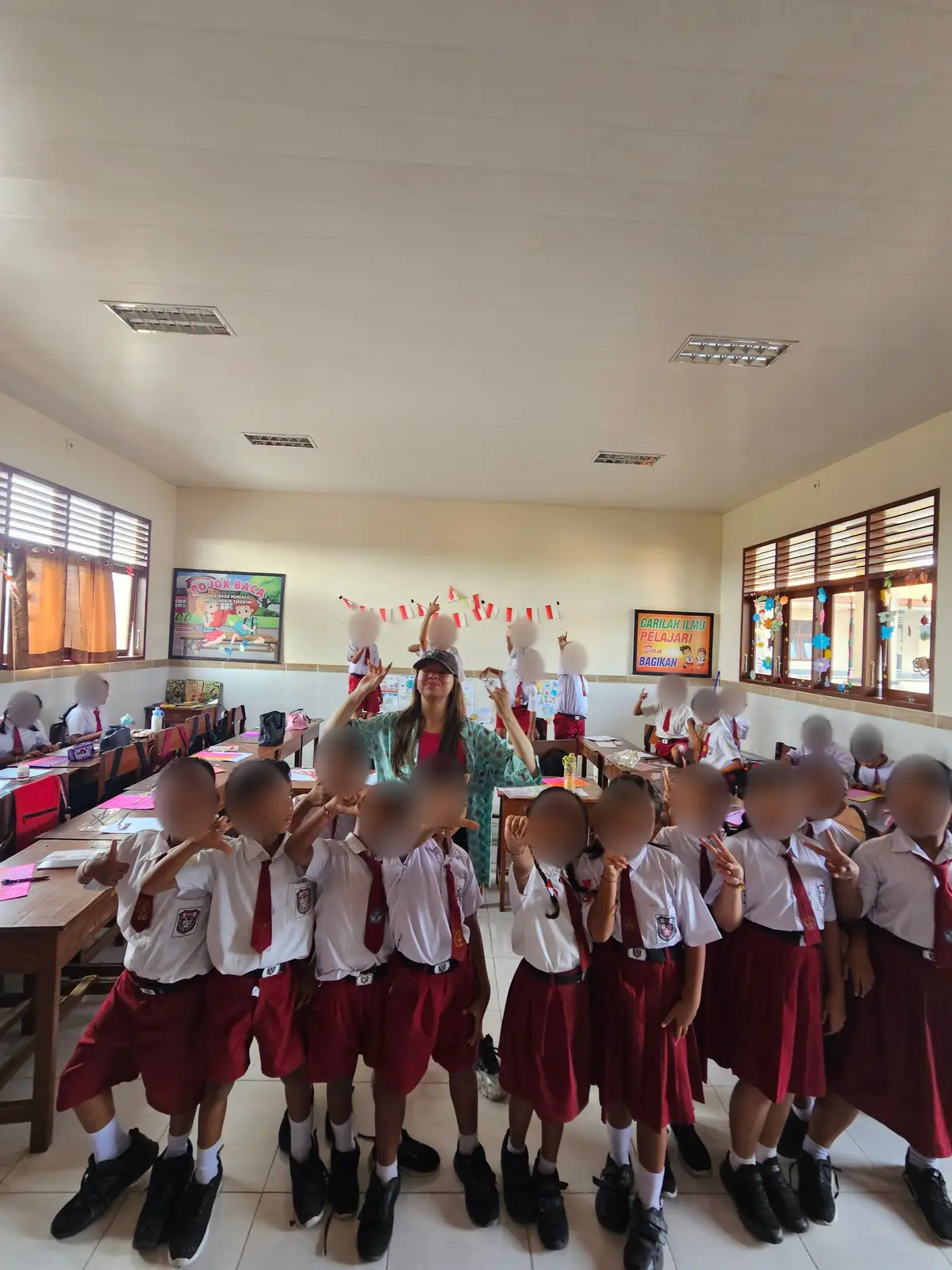
We met at a primary school. They told us that children wear different uniforms depending on the day: sometimes a regular one, sometimes a Balinese one. The Balinese uniform is also worn on holidays.
The school has its own temple. There are also statues of Ganesha, the god of wisdom who removes obstacles, and Saraswati, the goddess of knowledge and the arts. So religion is part of school life too, not just temples and ceremonies.
We went up to a classroom with about twenty children, right in the middle of an English lesson. They practised on us: we took turns introducing ourselves, and then the children answered questions about what they remembered about us. A correct answer won a little prize, a notebook. The children loved it, and so did we.
The procession and the Barong
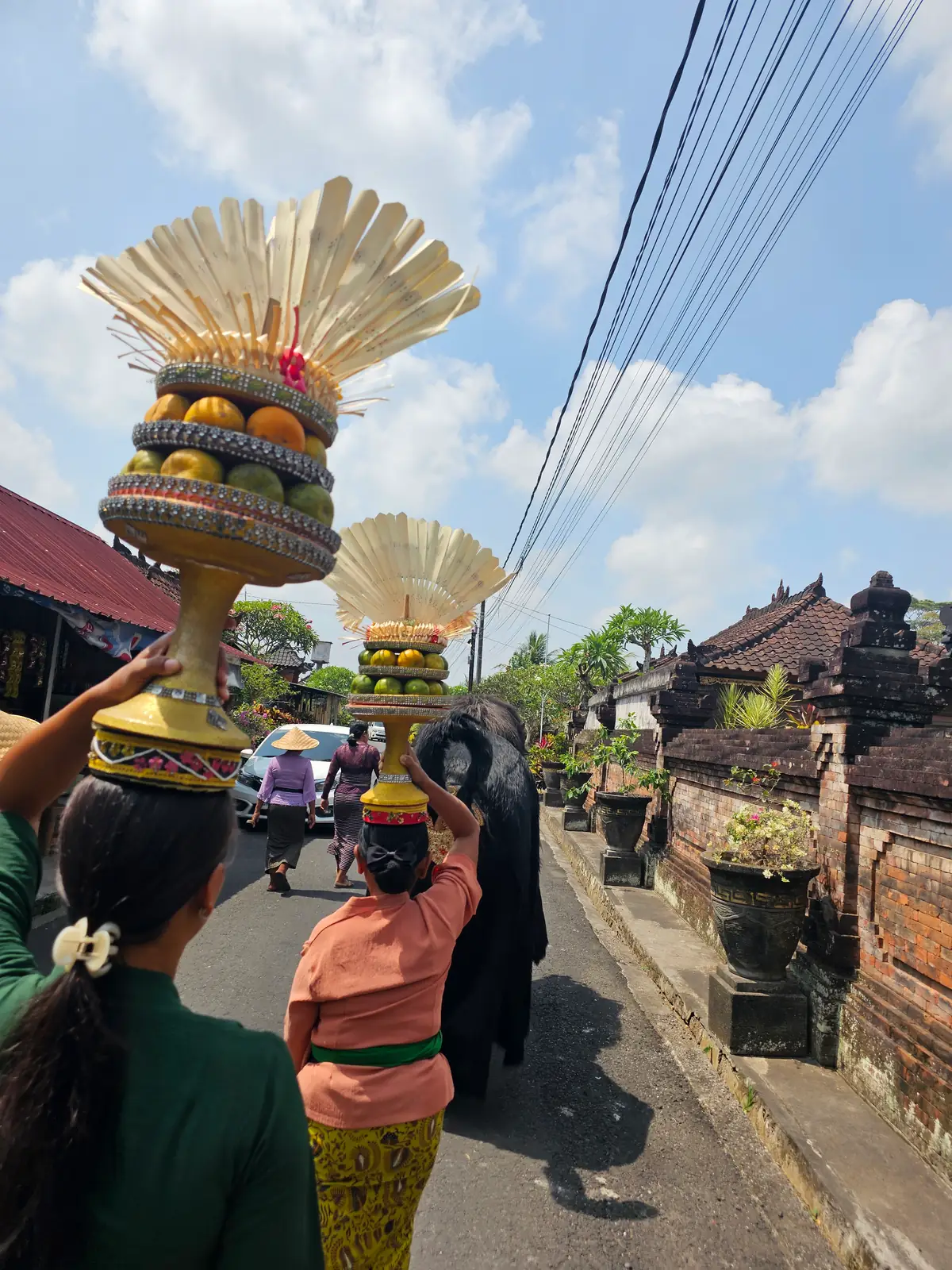
Then we carried offerings to the temple on our heads, the way Balinese women do. Of course, I immediately sent my mum a video of me walking with an offering on my head: that’s what happens when your daughter decides to roam the world.
On the way we were met by the Barong, a huge shaggy creature from Balinese mythology, a guardian spirit and a symbol of good. Two dancers are inside the costume: one works the head, the other the back end. Its dance isn’t a show but part of religious tradition. And I gave it a hug 🤗
Art in the temple
In the village temple we sat and talked. Our guide explained how closely art is tied to Balinese philosophy: you can treat any task as an art and put a part of yourself into it.
That really struck me: it’s probably exactly my own approach.
How a Balinese home is laid out
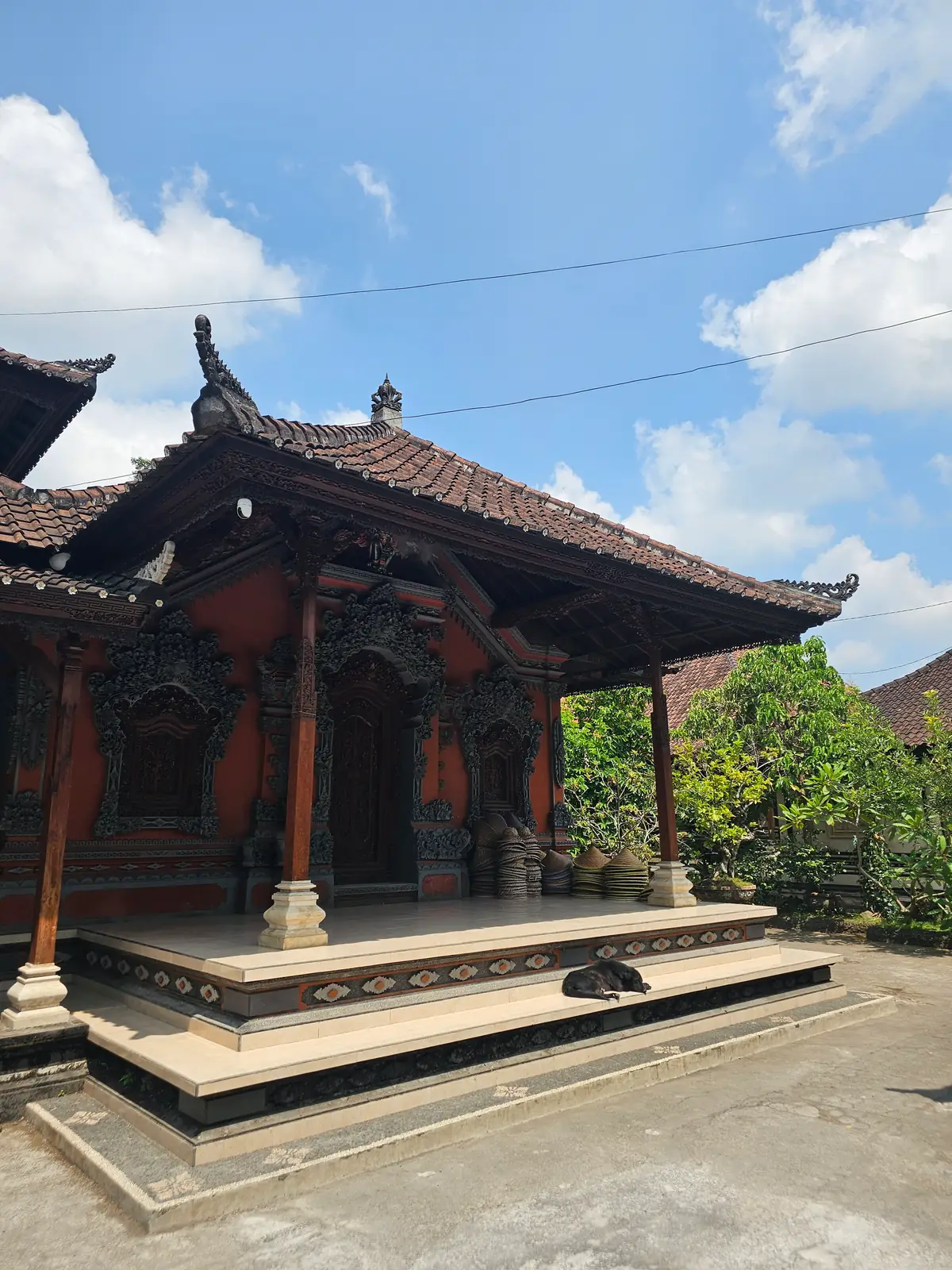
Then we went to a traditional home. They showed us a wealthy one; in reality many homes are more modest, and sometimes it’s just one building. But traditionally it isn’t a single building but a whole compound of pavilions inside a shared wall, and everything is arranged by rules, a bit like feng shui. The side facing the mountains and the main temple is considered sacred, the side facing the sea is for everyday life. That’s why the family temple faces the main temple and the kitchen is in the south.
Inside are separate pavilions for different family members, for example the uncle’s house and the grandfather’s house. When a woman marries, she moves into her husband’s family home, so several generations live side by side.
Offerings
In the family temple, people make offerings and pray three times a day: around 6 a.m., at noon and at 9 p.m., I think. The midday one is sometimes skipped, because people are at work or school.
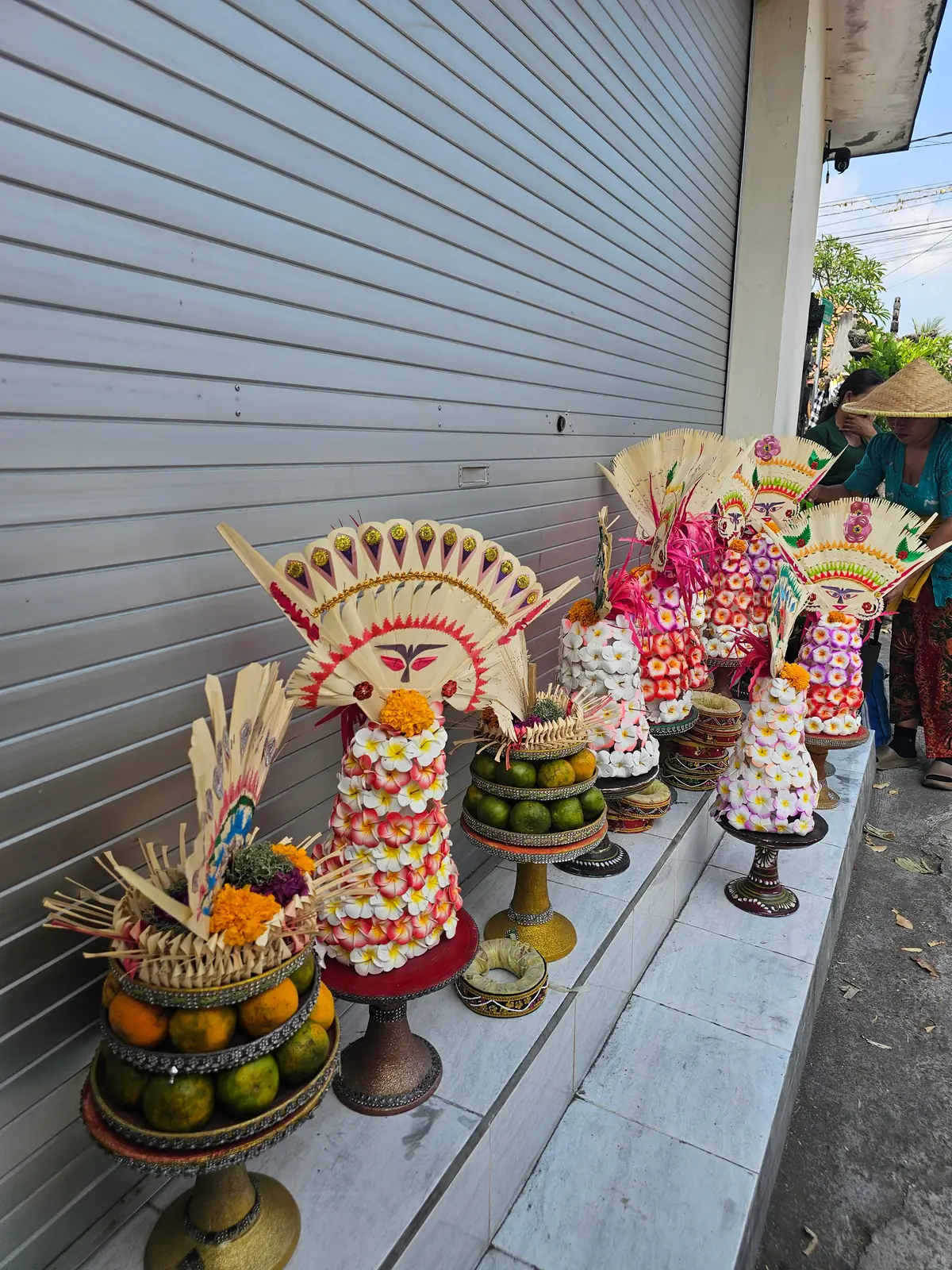
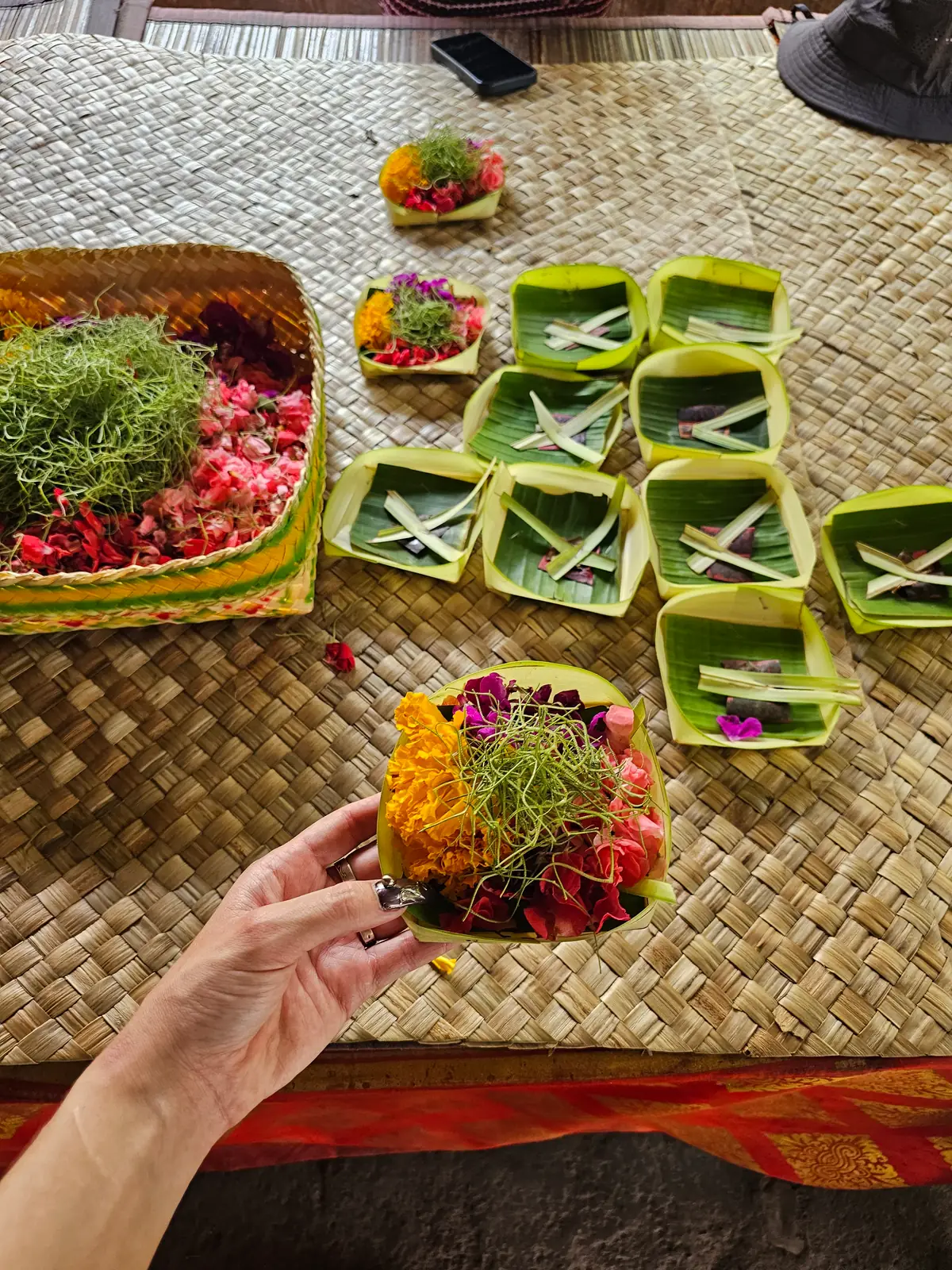
We learned to make canang sari, the small daily offerings of flowers in a little palm-leaf basket. Each colour and where it sits stands for a god and a direction: white for east, red for south, yellow for west, blue for north. And the centre is their unity. So much meaning in such a small basket!
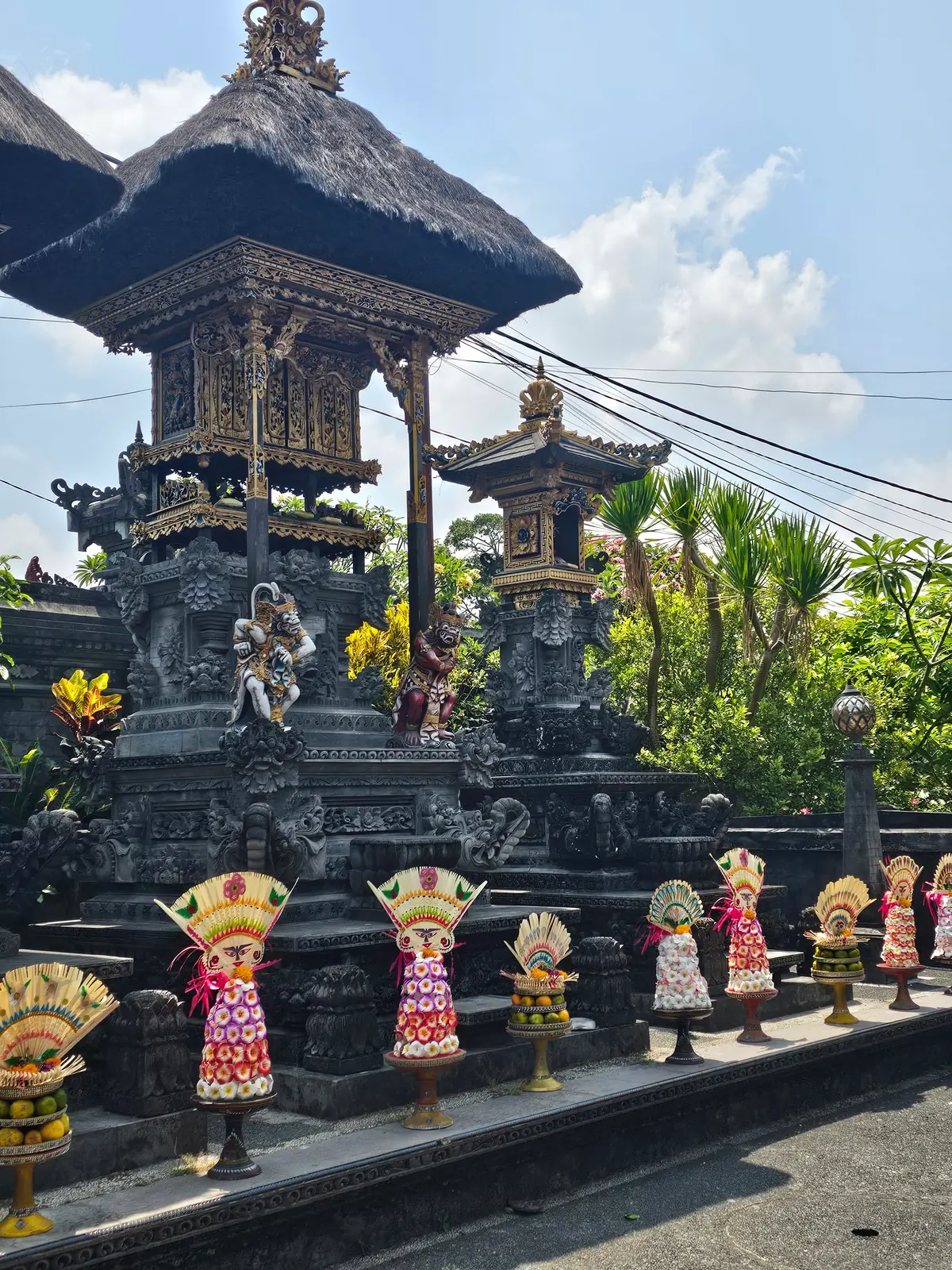
There are also huge offerings: tiered towers of fruit and flowers. Women carry them on their heads. I tried it myself, and my respect for their sense of balance has gone through the roof.
Caste
They also told us how people find a partner. Bali has a caste system, roughly an upper, a middle and a lower caste. An interesting fact: a woman from the upper caste can’t marry a man from a lower one, but the other way round is fine. So, roughly speaking, women can marry up but men can’t.
Ceremonies
The home has a ceremonial area where family ceremonies take place.
Birthdays. Balinese people don’t celebrate their birthday once a year: by the Balinese calendar, the otonan comes round every 210 days.
Coming of age. When a boy or girl comes of age, there’s a ceremony called metatah: their six upper front teeth are symbolically filed. It stands for victory over six inner vices. In Balinese Hinduism there are six of them, not seven like the deadly sins in Christianity, and gluttony isn’t one of them. “So in Bali you can eat a lot, and eat well,” our guide joked. There’s something very sweet about that.
Farewell. They also told us about death. The body is laid out in a ceremonial pavilion, the family says goodbye, and the community, sometimes around a hundred people, comes to wash the body. The cremation is held on an auspicious day, and sometimes that means waiting a month, in which case the body is kept in the hospital’s cold store and the family pays for every day. Then comes the cremation; the ashes are released into the ocean, and water is taken from the ocean: one glass goes to the family temple and another to the great main temple (probably Besakih, Bali’s “mother temple” on the slopes of Mount Agung).
Food
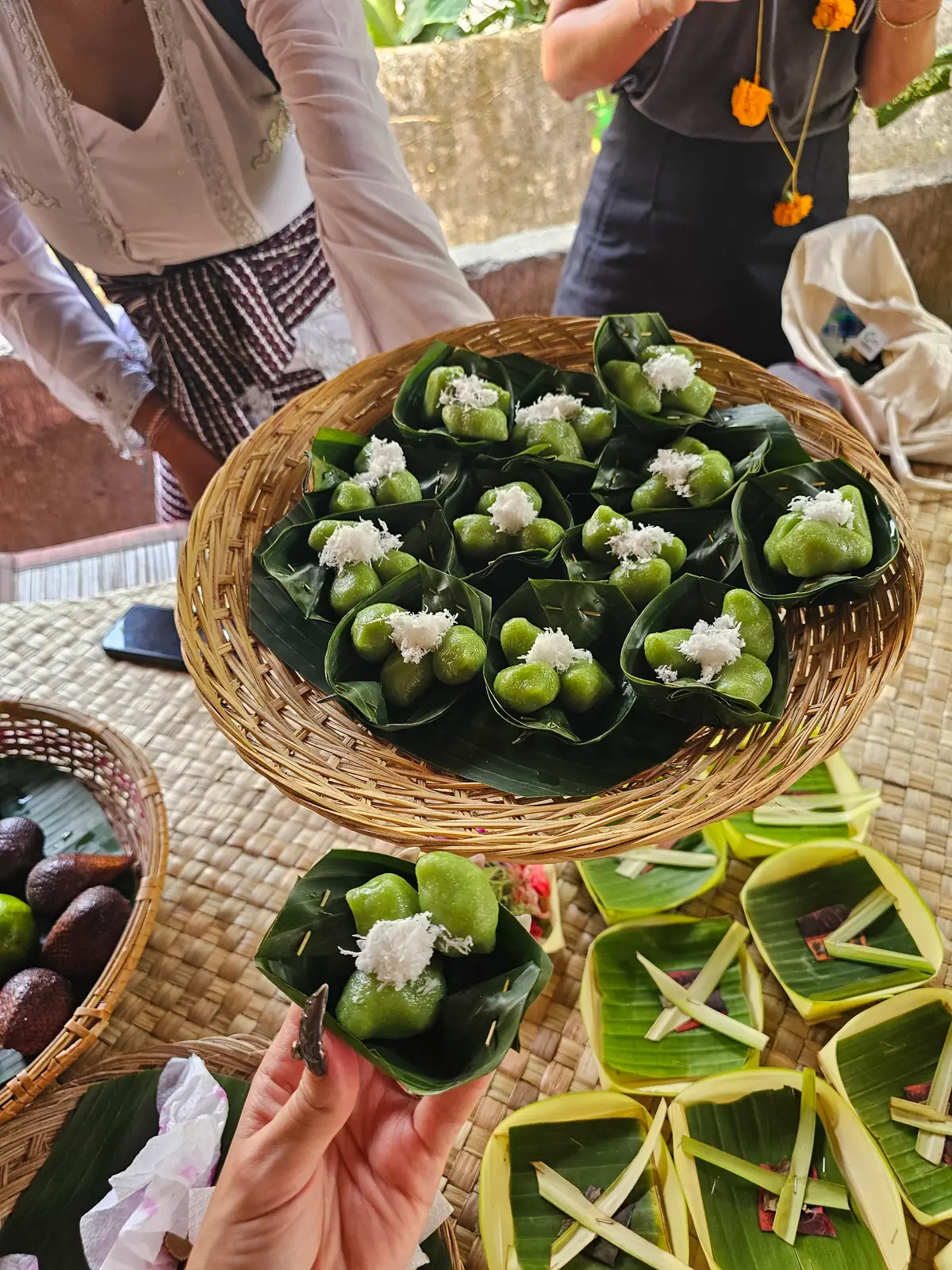
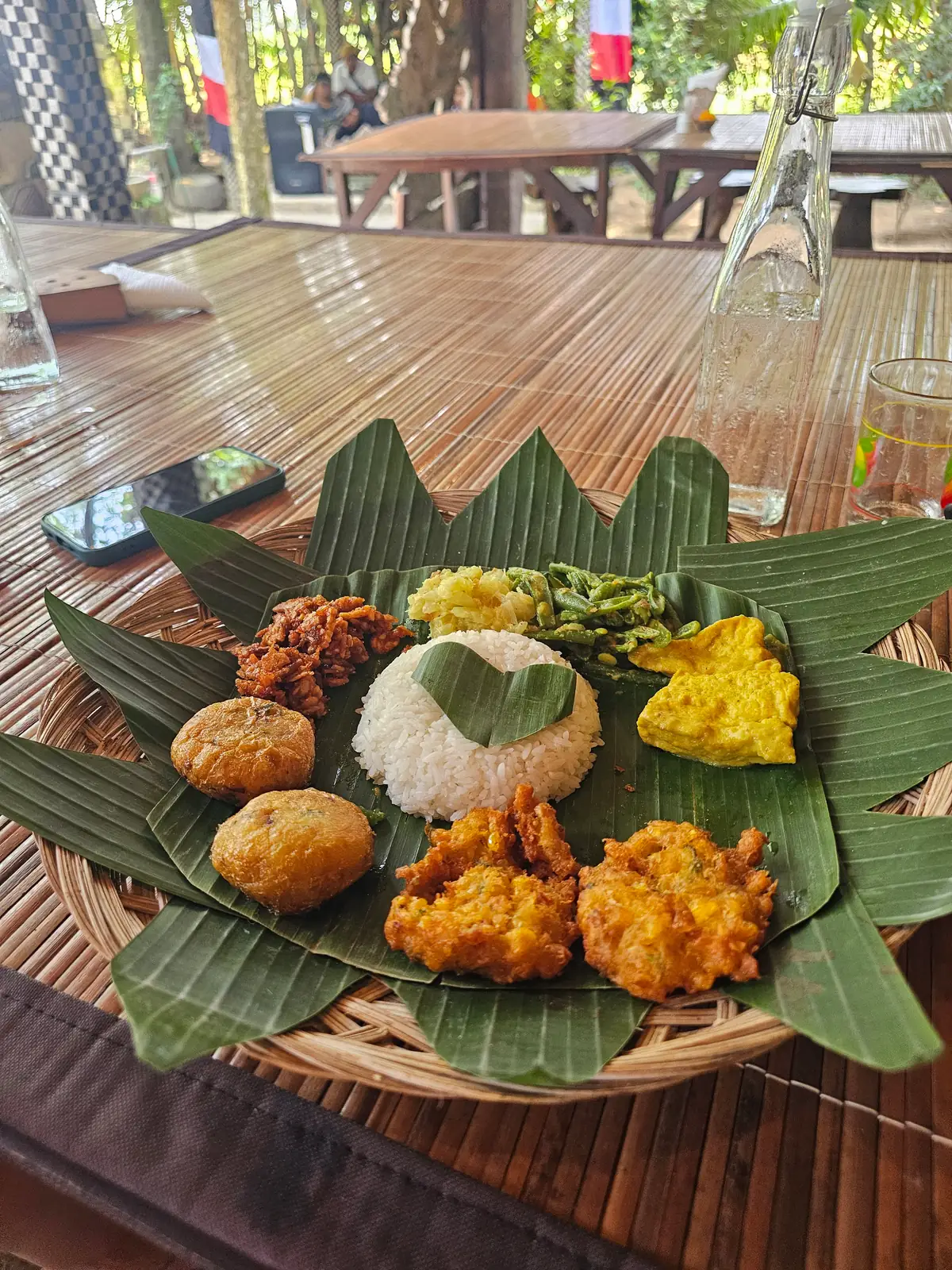
They introduced us to local fruit, snake fruit (salak) and dragon fruit. And they let us try klepon: green rice balls with liquid palm sugar inside and grated coconut on the outside. I loved them.
Then we made satay lilit, Balinese skewers; everyone tried them with chicken. I’m vegetarian, so I only tried the sauce, and it was seriously good. I need to find it. They also told us about local spices and what goes into what, showed us how coconut oil is made and gave us cocoa to try.
The rice field
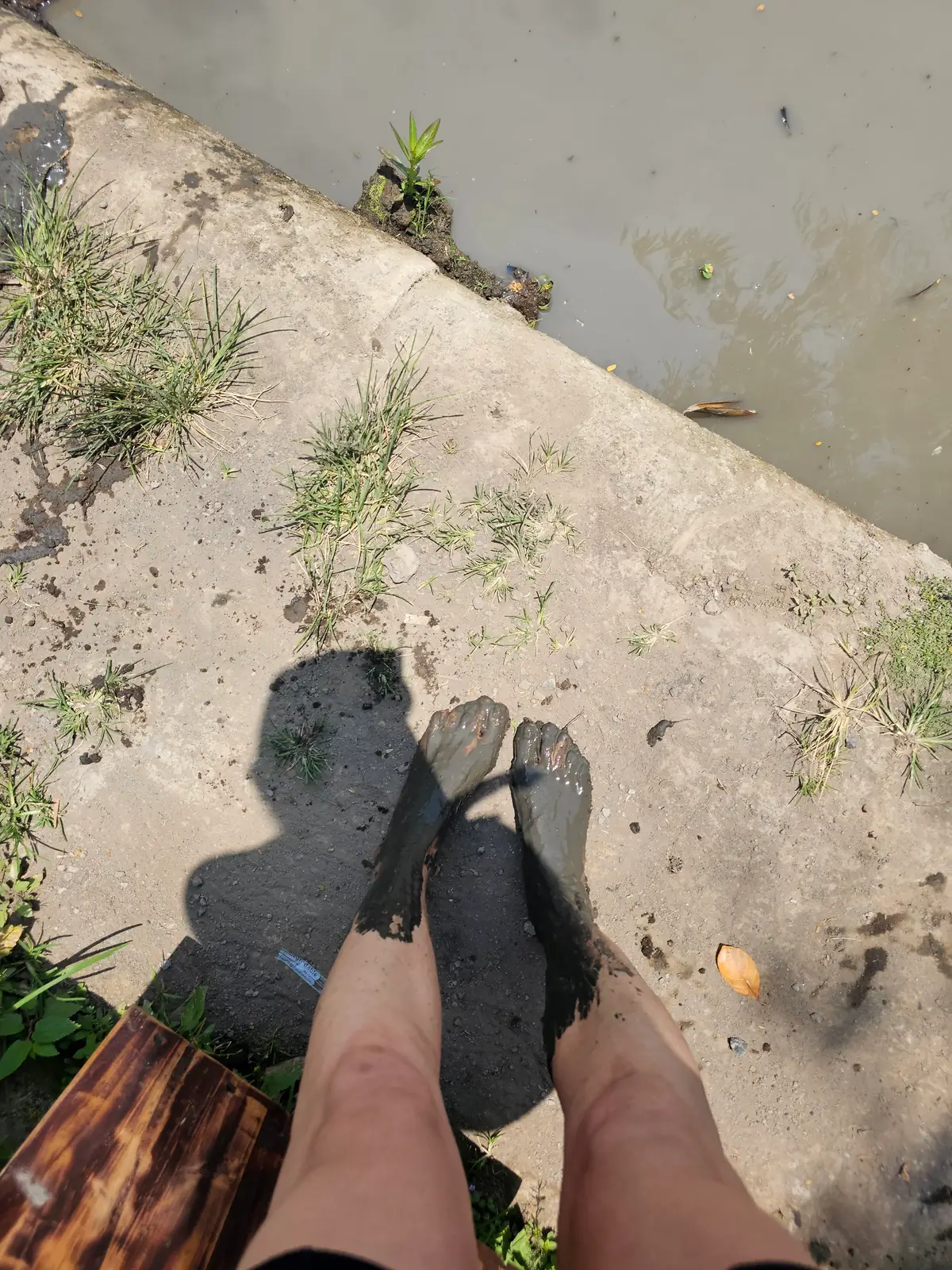
At the end we planted rice by hand in well-soaked, squelchy soil. My debut as a farmer went well: judging by my legs, very well 🌾
I really didn’t expect this day to be so interesting. I genuinely loved it.
Comments
I don’t ask for your email. I read every comment myself before it’s published.